HOME  »  rocksea & sarah nature photography » India-Kerala-Birds »  Viewing prappidiyan_001     [Image 49 of 50]  :: Jump To  
  First slide Previous slide      Show/Hide EXIF Info Index Page Start/Stop the slide show      Next slide Last slide  
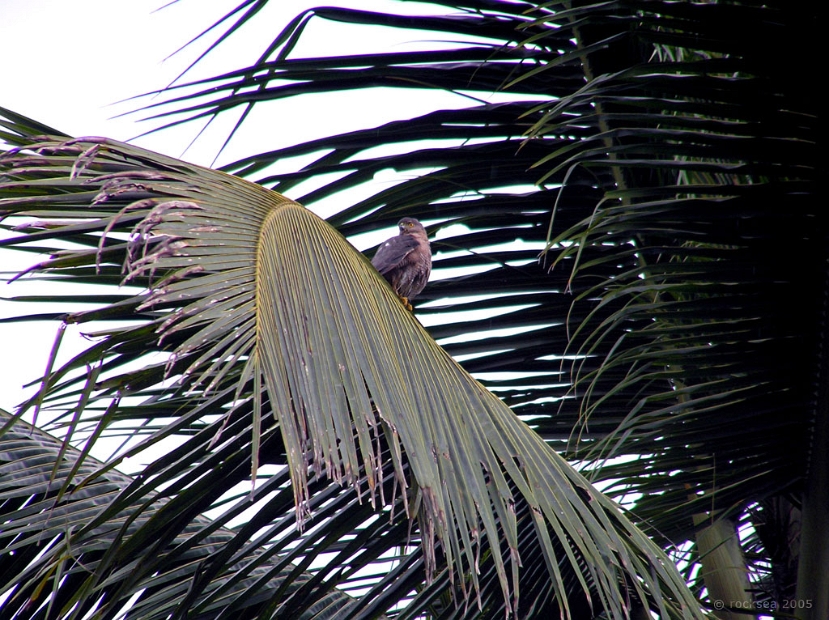
Comment: waiting for the prey? @ home, kerala
smallgreen_barbet_003 * small green barbet (white cheeked) megalaima viridis. Once I've examined the nest of this species. They bore a hole on worn-out trees (in this case a rubber tree). Inside is funnel shaped. This helps the excreta of the chicks to be collected below without spoiling the chicks. Male and female parents fly to and fro constantly to fetch food for the chicks. They rarely come on ground. Their kutturu-kutturu sounds gave them their name kutturuvan. Also known as pachilakudukka in our place due to its color. @ home, kerala

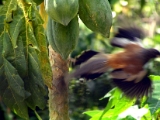
indian_treepie_flight_001 * indian treepie on flight. dendrocitta vagabunda. Member of the Corvidae (crow) family. The head, neck and breast are a deep slate-grey colour, sometimes slightly brownish. The underparts and lower back are a warm tawny-brown to orange-brown in colour with white wing coverts and black primaries. The tail is a light bluish-grey with a thick black band on the tip. The bill, legs and feet are black. This is a typically arboreal species feeding almost completely in trees for fruits, invertebrates, small reptiles and the eggs and young of birds. It is extremely agile while searching for food, clinging and clambering through the branches. Its acrobatic dances on the coconut palm leaf (ola) gave it the name olenjali in Kerala. It has been known to take flesh from a recently killed carcass and will sometimes travel in small feeding parties with other unrelated species such as drongos and babblers. @ home, kerala

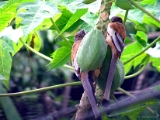
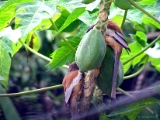
indian_treepie_004 * randu olenjalikal. the indian treepie. dendrocitta vagabunda. Member of the Corvidae (crow) family. The head, neck and breast are a deep slate-grey colour, sometimes slightly brownish. The underparts and lower back are a warm tawny-brown to orange-brown in colour with white wing coverts and black primaries. The tail is a light bluish-grey with a thick black band on the tip. The bill, legs and feet are black. This is a typically arboreal species feeding almost completely in trees for fruits, invertebrates, small reptiles and the eggs and young of birds. It is extremely agile while searching for food, clinging and clambering through the branches. Its acrobatic dances on the coconut palm leaf (ola) gave it the name olenjali in Kerala. It has been known to take flesh from a recently killed carcass and will sometimes travel in small feeding parties with other unrelated species such as drongos and babblers. @ home, kerala

indian_treepie_003 * randu olenjalikal. the indian treepie. dendrocitta vagabunda. Member of the Corvidae (crow) family. The head, neck and breast are a deep slate-grey colour, sometimes slightly brownish. The underparts and lower back are a warm tawny-brown to orange-brown in colour with white wing coverts and black primaries. The tail is a light bluish-grey with a thick black band on the tip. The bill, legs and feet are black. This is a typically arboreal species feeding almost completely in trees for fruits, invertebrates, small reptiles and the eggs and young of birds. It is extremely agile while searching for food, clinging and clambering through the branches. Its acrobatic dances on the coconut palm leaf (ola) gave it the name olenjali in Kerala. It has been known to take flesh from a recently killed carcass and will sometimes travel in small feeding parties with other unrelated species such as drongos and babblers. @ home, kerala

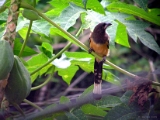
indian_treepie_002 * olenjali. the indian treepie. dendrocitta vagabunda. Member of the Corvidae (crow) family. The head, neck and breast are a deep slate-grey colour, sometimes slightly brownish. The underparts and lower back are a warm tawny-brown to orange-brown in colour with white wing coverts and black primaries. The tail is a light bluish-grey with a thick black band on the tip. The bill, legs and feet are black. This is a typically arboreal species feeding almost completely in trees for fruits, invertebrates, small reptiles and the eggs and young of birds. It is extremely agile while searching for food, clinging and clambering through the branches. Its acrobatic dances on the coconut palm leaf (ola) gave it the name olenjali in Kerala. It has been known to take flesh from a recently killed carcass and will sometimes travel in small feeding parties with other unrelated species such as drongos and babblers. @ home, kerala

Next slide
 
prappidiyan_001.jpg - 2005.09.11 17:44:42
purple_rumped_sunbird_001 * purple rumped sunbird in its nest. taken from our hostel in 2002. sanathana hostel, cusat, kerala.

  First slide Previous slide      Show/Hide EXIF Info Index Page Start/Stop the slide show      Next slide Last slide  
 Viewer Remark(s)    [Show/Hide]
Album last updated on 2011.09.07 21:12:15
copyright© RockSea & Sarah 2005-2011